Bioclimatic Design and Materials
Green roofs have been investigated as a bioclimatic strategy to improve the energy efficiency of buildings
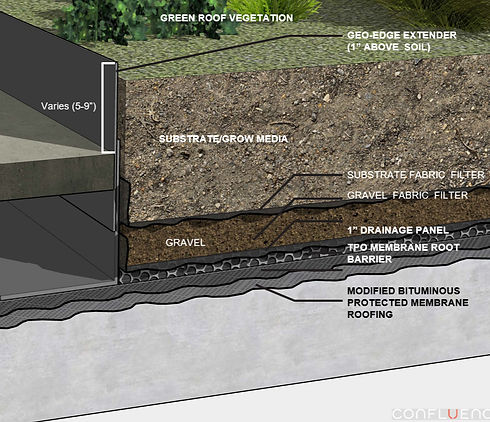
Kansas State University Green Roofs

Kansas State University Green Roofs
Experimental studies
In my experimental study, guided by bioclimatic design principles, I examine how variations in green roof substrate types, depths, and plant combinations influence building energy efficiency across different seasons. Using in situ data collected over multiple years, I analyze real-world soil heat storage, temperature dynamics, and moisture levels on a multi-bed green roof. This work highlights the importance of soil moisture and roof design in improving urban building performance and offers practical insights for climate-responsive architecture in the mid-continental United States. Another study examined the carbon sequestration potential of green roofs across the U.S. Great Plains. Over multiple growing seasons, researchers tested various substrate types and depths combined with three plant mixes.
Alam, M. M. L., Skabelund, L. R., Gibson, M. D., Lee, Jungwoo (2026). Assessing seasonal thermal performance of a Mid-Continental USA green roof system under real-world conditions: Moisture-driven thermodynamic implications for building energy performance. Energy and Buildings, 117607. https://doi.org/10.1016/j.enbuild.2026.117607


Localized Bioclimatic Building Envelopes: Strategies for Climate Adaptation
This ongoing research simulates a small cell of a building envelope using green roof systems adapted to the humid subtropical climate of Greenville, North Carolina, USA. It explores how combinations of native plants, soil substrates, and roof depths influence thermal performance, stormwater management, and climate resilience.
Grounded in bioclimatic design principles, the study emphasizes the use of locally appropriate materials and vegetation to work with, rather than against, the regional climate. Aligned with Low-Impact Development (LID) strategies, it monitors temperature, moisture, and runoff to evaluate how green roofs can reduce urban heat, filter and detain stormwater, and enhance the environmental performance of buildings across the East Coast.
If you are interested in this research or potential collaboration, feel free to reach out.
We have fully developed and equipped green roof and bioclimatic materials research facilities at East Carolina University.
Special thanks to Living Roofs Inc., SPC Mechanical, Stalite, and Omni Ecosystems for their generous donations and support in making this possible.